

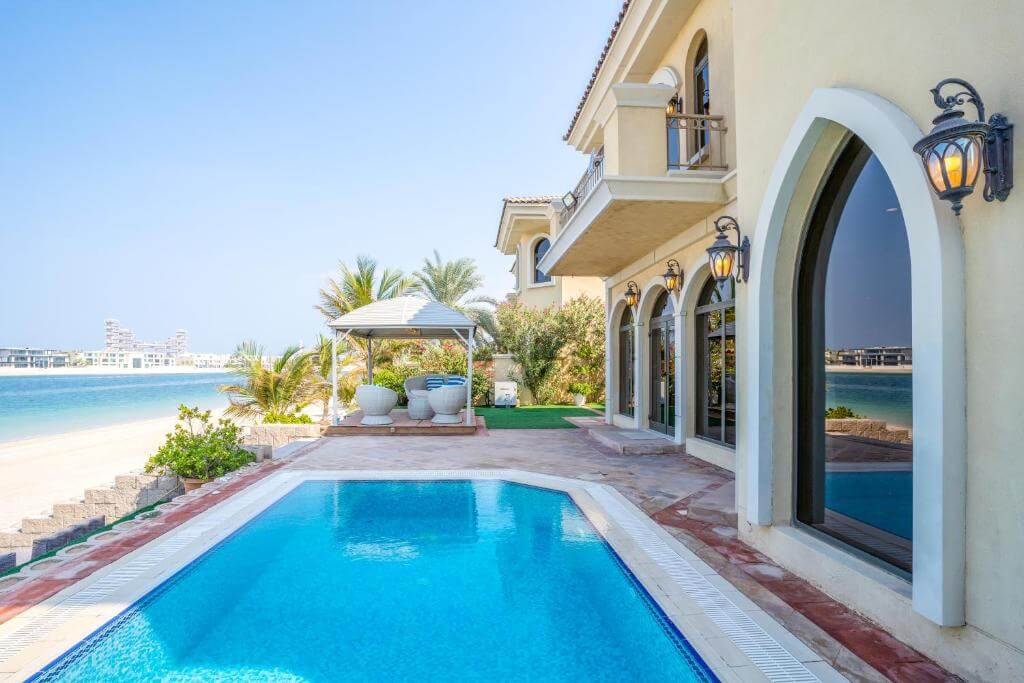
Luxury Villa Renovation in Dubai: Essential Tips for a Seamless Upgrade
Dubai is famous for its high-end villas, iconic neighborhoods, and residential architecture that shows modern living and refined taste. But even the most luxurious and well-designed villas at times require upgrades to match functional needs, design preferences, and evolving lifestyles.
High-end residential upgrades often involve complex design decisions, premium materials, and coordination across multiple trades. When managed correctly, a villa renovation improves comfort, functionality, and long-term property value while maintaining architectural integrity.
The following tips outline how homeowners can approach luxury villa renovation in Dubai with clarity and confidence.
Define Clear Renovation Objectives
Begin by identifying the purpose of the renovation. Some homeowners focus on modernizing interiors, while others prioritize layout reconfiguration, energy efficiency, or outdoor living upgrades. Clear objectives help guide design decisions and budget allocation.
Luxury renovations often involve multiple zones such as living spaces, kitchens, bathrooms, landscaping, and service areas. Establishing priorities ensures resources are directed toward areas that deliver the highest practical and lifestyle value.
Work With Experienced Luxury Renovation Specialists
Villa renovation in Dubai at a premium level demands specialist expertise. Contractors with experience in luxury residential projects understand detailing standards, finish quality, and coordination requirements.
Review portfolios that reflect similar villa types and scales. A specialist renovation company like USBC Interiors brings detailed processes, skilled craftsmen, and reliable supplier networks that support consistent execution.
Ensure Regulatory Approvals and Compliance
Dubai requires formal approvals for renovation work, particularly when structural changes, MEP modifications, or external alterations are involved. Permissions may be required from Dubai Municipality, developers, or community management authorities.
An experienced renovation contractor manages drawings, submissions, and inspections efficiently. Early compliance planning prevents delays and avoids unnecessary site interruptions.
Invest in Thoughtful Space Planning
Effective space planning improves flow, privacy, and usability. Luxury villa renovations often involve opening living areas, enhancing natural light, or redefining private and service zones.
Engage design professionals who can align spatial planning with daily living patterns. Well-considered layouts support comfort while preserving the villa’s architectural character.
Select High-Quality Materials and Finishes
Material selection plays a central role in luxury renovations. Flooring, wall finishes, cabinetry, stonework, and fixtures should balance visual appeal with durability and ease of maintenance.
Dubai’s climate places specific demands on materials. Heat-resistant, moisture-tolerant, and low-maintenance finishes perform better over time and retain their appearance under local conditions.
Focus on Mechanical, Electrical, and Plumbing Systems
Behind-the-scenes systems are critical to renovation success. Upgrading electrical capacity, plumbing lines, air conditioning, and smart home infrastructure improves efficiency and comfort.
Luxury villas often incorporate advanced lighting controls, climate zoning, and integrated security systems. Proper coordination during renovation prevents future disruptions and supports long-term performance.
Plan Construction Phases Carefully
Luxury villa renovations benefit from structured phasing. Clear sequencing minimizes disruption, protects completed finishes, and maintains site safety.
If the villa is occupied during renovation, phased execution allows certain areas to remain functional. Detailed planning reduces inconvenience while maintaining project momentum.
Prioritize Craftsmanship and Detailing
High-end renovations are defined by precision. Joinery alignment, tile setting, paint finishes, and fixture installation require skilled workmanship and close supervision.
Regular quality inspections during construction ensure standards are met at each stage. Attention to detail separates premium outcomes from average results.
Manage Budget With Transparency
Luxury renovations involve significant investment. A detailed cost breakdown supports financial control and informed decision-making throughout the project.
Allow for contingency planning to address design refinements or unforeseen site conditions. Transparent communication between homeowner and contractor helps manage expectations and maintain trust.
Incorporate Outdoor Living Enhancements
Dubai villas often feature private gardens, terraces, and pool areas. Renovation projects frequently include outdoor kitchens, shaded seating, landscaping, and lighting upgrades.
Outdoor enhancements extend living space and support lifestyle use throughout much of the year. Coordinated design between interior and exterior areas creates visual continuity and functional balance.
Allow Time for Testing and Handover
Before project completion, thorough testing of systems and finishes is essential. Lighting controls, HVAC systems, plumbing fixtures, and smart features should be reviewed and adjusted.
A structured handover process includes documentation, warranties, and maintenance guidance. This step ensures the renovated villa performs as intended from day one.
Luxury villa renovation in Dubai requires a disciplined approach supported by experienced professionals, quality materials, and clear project planning. Each decision, from layout to finishing details, contributes to comfort, performance, and property value. With careful preparation and expert execution, homeowners can achieve refined, functional upgrades that support long-term living standards and align with Dubai’s expectations for premium residential spaces.

Transforming Commercial Spaces: Office Fit-Out Trends Boosting Productivity in UAE
UAE’s modern workplace continue to transform as companies place focus on brand representation, operational efficiency, and employee well-being. Office environments are not viewed as basic work zones anymore, but as strategic assets that impact retention, collaboration, and performance.
Commercial fit-out projects in the UAE are now being shaped by productivity-powered design principles. Office fit-out trends focus on developing balanced spaces that support comfort, interaction, and focus. From technology-integrated interiors to flexible layouts, design choices play a superior role in making productive workplaces.
The Role of Office Fit-Out Design in the UAE
UAE’s commercial spaces show global workplace standards and adapt to regional climate conditions and business culture. Businesses are now investing in office fitout solutions that align organizational goals with physical environments.
Productivity as a Design Priority
Productivity-steered design is more than aesthetics. It considers how materials, acoustics, lighting, and layout impact employee performance. A well-planned office supports various working styles, improves workflow, and reduces distractions. Key productivity factors are:
- Access to quiet and collaborative zones
- Ergonomic furniture
- Acoustic and visual comfort
- Efficient space planning
Flexible Layouts for Modern Work Styles
Flexibility has become the biggest element in office fit-out planning and adaptable workspaces, especially in hybrid work models that have gained traction in the UAE. Modern offices are designed to accommodate increasing operational needs and changing team sizes. Multi-purpose, movable partitions, and modular furniture enable companies to adjust layouts without making huge structural changes. Common flexible layout features include:
- Informal breakout areas
- Convertible meeting rooms
- Shared collaboration zones
- Reconfigurable workstations
Productive offices balance areas dedicated to focused tasks with open collaboration. Fit-out designs involve enclosed spaces and open-plan zones to suit various work requirements.
Employee Well-Being & Ergonomics
The comfort of employees has a direct influence on job satisfaction and productivity. Ergonomic designs have become the central trend in UAE office fit outs. This also includes furniture designed for efficiency and comfort. Properly positioned workstations, adjustable desks, and ergonomic seating help to reduce physical strain during long working hours. Such elements support overall comfort, movement, and posture. Key ergonomic considerations are:
- Monitor positioning to reduce eye strain
- Sit-stand desks
- Adjustable lumbar support and chairs
- Wellness-oriented design elements
Well-being-focused offices have features that promote mental and physical health. Designated relaxation areas, calming color schemes, and natural light access add up to a healthy work environment.
Smart Technology Integration in Office Fit-Outs
Technology also has an important role in improving connectivity and efficiency within commercial spaces. This requires intelligent office systems. Smart systems enable centralized control of access management, climate, and lighting. Such solutions enhance everyday operational convenience and improve energy efficiency. Popular smart integrations are:
- Digital room booking systems
- Smart temperature control
- Automated lighting systems
- Digital and supporting hybrid workflows
An office fitout involves technology-ready meeting rooms packed with adaptable furniture, acoustic treatments, and video conferencing tools to support remote collaboration.
Lighting Design That Doubles Performance
Lighting impacts productivity, focus, and mood which further makes it a critical component of office fit-out design. This also maximizes natural light since office layouts in the UAE prioritize glass partition and window access to allow daylight penetration. Natural light creates an inviting workspace and reduces fatigue. To do this, layered artificial lighting is required, which is designed in layers to support multiple tasks throughout the day. Lighting layers may involve:
- Accent lighting for feature areas and branding
- Task lighting for workstations
- Ambient lighting for general illumination
Acoustic Solutions for Focused Work Environments
Noise control is necessary in open-plan offices. Acoustic planning ensures that sound levels remain conducive to productivity. Office fitout companies in Dubai have to manage sound via design. Sound-absorbing, ceiling baffles, and acoustic panels help to manage noise without having to compromise on design appeal. Such solutions maintain visual harmony and reduce distractions.
Meeting rooms and quiet zones are also added in this design type. Enclosed meeting spaces, phone booths, and dedicated quiet rooms provide staff with areas for confidential discussions and concentration.
Brand Identity via Interior Design
An office interior is the physical representation of a company’s value and culture. Companies have to align corporate identity with design. Fit-out design incorporates visual elements, materials, and brand colors to create a cohesive identity.
Meeting rooms, feature walls, and reception areas showcase branding in effective and subtle ways. This also creates a memorable client experience. A well-designed office builds trust and enhances customer perception. Welcoming spaces, quality finishes, and professional layouts add up to positive first impressions.
UAE’s office-fit out trends show a growing focus on brand presence, employee well-being, and productivity. Through smart technology, ergonomic solutions, and flexible layouts, commercial spaces continue to support positive work culture and efficient workflows. If this is what you are interested in, then get in touch with us at USBC Interiors today.
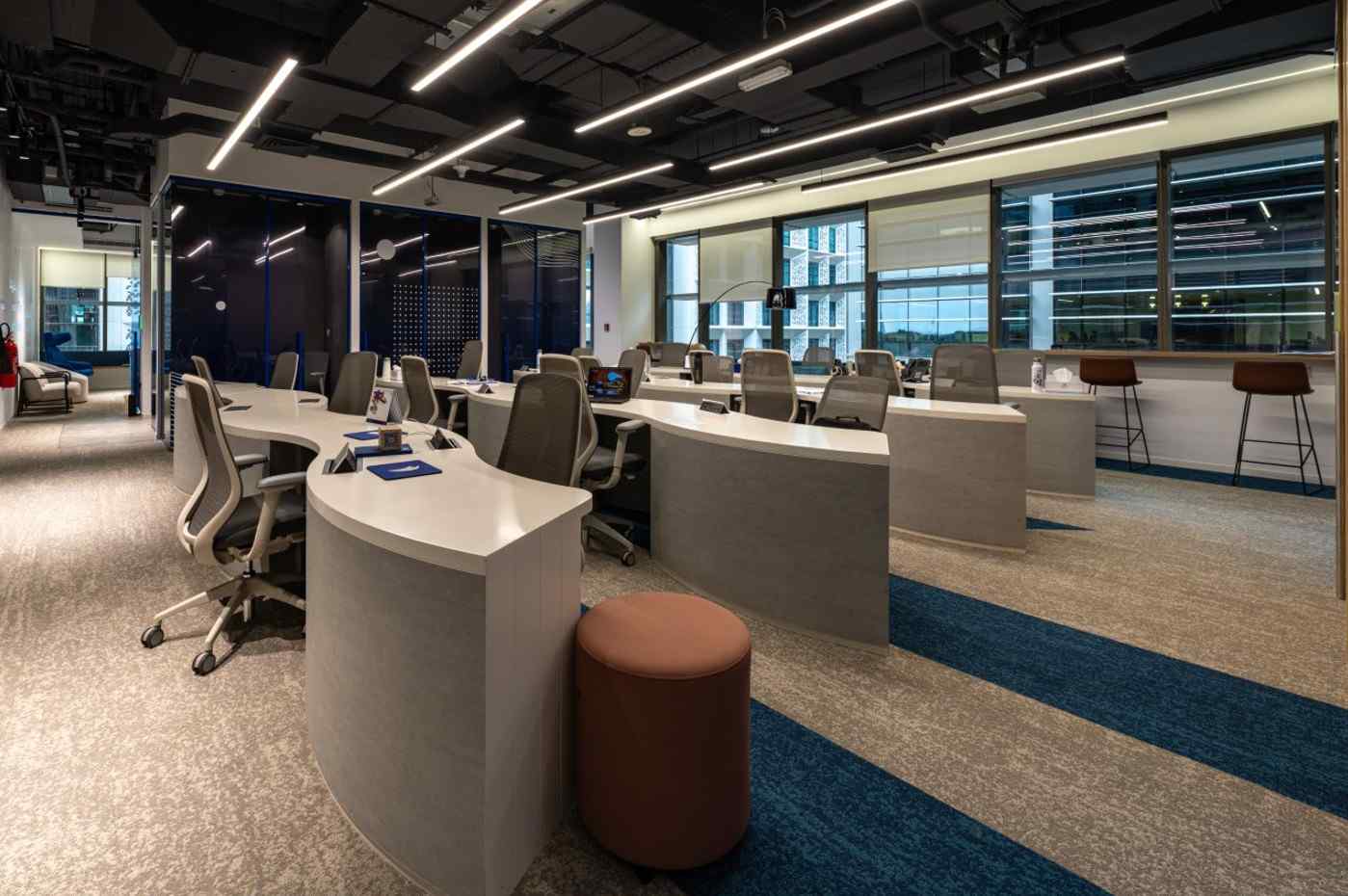
5 Trends Shaping Dubai’s Offices & How USBC Interiors Is Leading the Way
Office spaces in Dubai are changing. These are no longer static spaces for routine tasks, but environments that are specifically designed to inspire, connect, and support the people within them.
As a creative interior fit out contractor in Dubai, we at USBC Interiors are observing a powerful wave of change. Since our founding in 2018, we have been privileged to help shape workspaces that reflect the city’s forward-thinking spirit.
Here are five key trends shaping office fit outs in Dubai today, along with a look at our approach to bringing them to life.
1. A Deep-Rooted Commitment to Sustainability
The conversation around sustainable design has moved from a whisper to a core demand. Clients are actively demanding solutions that reduce environmental impact and promote resource efficiency. This involves integrating smart systems, selecting ethically sourced materials, and creating energy-efficient environments that are both responsible and cost-effective.
Our method at USBC Interiors is built on control and integration. With in-house teams for electromechanical and lighting design, we engineer systems that minimise energy consumption from the ground up. We specify low-VOC materials, prioritise regional suppliers to cut down on transportation emissions, and design for longevity, ensuring the finished space is a testament to thoughtful, sustainable practice that stands the test of time.
2. Biophilic and Wellness-Focused Design
Dubai’s spirited urban energy is incredible, but there is a growing desire to bring a sense of calm and nature into the workplace. Biophilic design, the practice of connecting people with nature within their environment, is becoming a standard for supporting mental and physical well-being. This trend manifests in abundant natural light, indoor greenery, organic textures, and spaces that encourage movement and mental respite.
We create environments where people feel good. Our interior design process carefully considers airflow, access to daylight, and the placement of living walls or potted plants. We create dedicated wellness rooms for quiet contemplation and design breakout areas that offer a visual and sensory break from computer screens. For us, a successful office is one that actively contributes to the health of its occupants.
3. Minimalist Luxury and Refined Aesthetics
The “more is more” aesthetic is giving way to a sophisticated minimalism. The new Dubai office speaks a language of quiet confidence and quality triumphs over quantity. Think clean lines, a curated palette of high-end materials, and statement lighting.
Our joinery division is central to the execution of this vision. We fabricate custom desks, wall panels, and reception counters that showcase exquisite craftsmanship. By managing this process internally, we guarantee a flawless finish and meticulous attention to detail. The result is a space that feels both luxurious and intentionally uncluttered, projecting a powerful brand identity through refined simplicity.
4. Flexible and Dynamic Layouts
Rigid rows of desks are a relic of the past. The modern workplace must be agile, supporting a variety of work styles and tasks. Companies need layouts that can adapt to collaborative projects, individual deep work, and team brainstorming with ease. This means creating a diverse ecosystem of spaces within one office.
As one of the top office fitout companies in Dubai, we design for movement and choice. Instead of a single, open floorplan, we introduce a mix of settings: open collaboration zones, soundproof phone booths, casual meeting nooks, and formal boardrooms. This fluidity allows teams to choose a setting that fits their immediate task, fostering productivity and spontaneous interaction. Our focus on detail ensures these different zones feel cohesive, united by a common design thread.
5. Technology Integration
Technology in the office should be an invisible facilitator, not a complicated obstacle. The demand is for integrated, user-friendly tech that works effortlessly. From wireless presentation systems and smart lighting to advanced video conferencing capabilities, the infrastructure must be intuitive and robust.
Our integrated structure is a significant advantage here. Our in-house electromechanical (MEP) and design teams work in lockstep from day one. This allows us to embed technology into the very fabric of the design, hiding unsightly cables and ensuring every power outlet and data port is exactly where it needs to be. We pre-empt the user’s needs, creating a seamless digital experience that empowers employees instead of frustrating them.
USBC Interiors' Unified Vision
What ties these trends together is the need for a single, accountable partner who can manage their complexity without sacrificing the creative vision or the program’s timeline. This is where our model shines.
Our ability to create all corresponding drawings in-house for interior design, joinery, MEP, and lighting gives us total control over quality and execution. There are no communication gaps between separate contractors. When our designers envision a custom, biophilic-inspired partition, our joinery team builds it. When our lighting designers plan an ambient scheme, our electromechanical engineers make it a reality. This synergy is the core of our service.
Our focus on detail ensures our clients are completely satisfied with the final product. Our goal is to establish long-term relationships built on trust, professionalism, and exceptional service.
We invite you to partner with USBC Interiors and find out why we have become a dependable name for office fitout solutions across the UAE. Let’s build the future of your workspace, together.
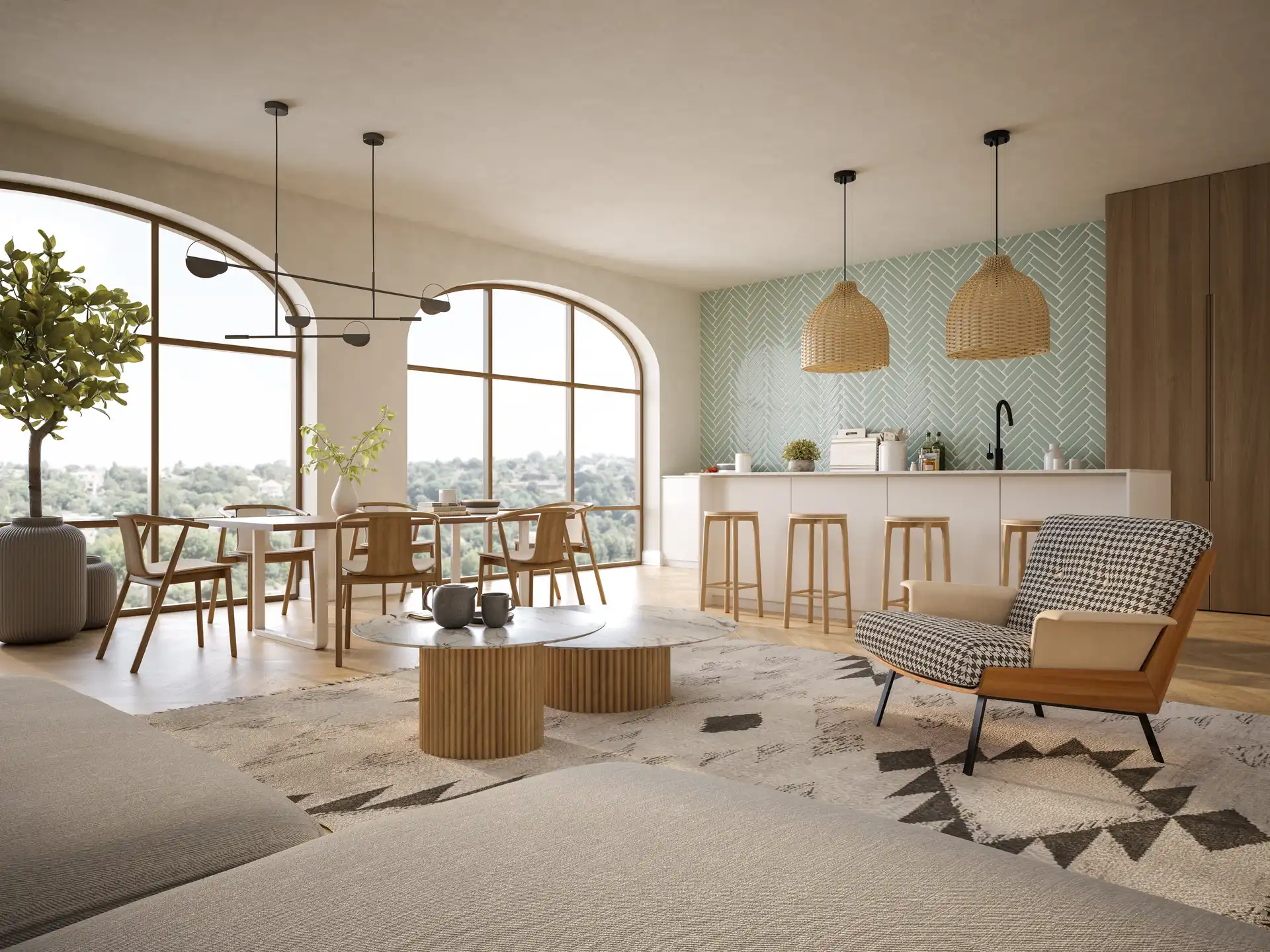
Interior Fit-Out vs Interior Design: Understanding the Difference
You have a space – four walls, a ceiling, a floor. It’s an empty shell full of potential. Turning that shell into a functional, beautiful environment involves two distinct, yet deeply connected, processes.
Many people use the terms “interior design” and “interior fit out” as if they are the same thing. But knowing the difference is the key to a successful project, whether you’re opening a new cafe or renovating your home office.
What is Interior Design?
Interior design involves understanding people’s behaviour to create functional and aesthetically compelling spaces within a building. A designer is the initial visionary. They listen to your needs, your brand identity, and your personal style, then translate that into a cohesive concept.
This phase is all about the “what” and the “why.” What is the purpose of this room? Why should this wall be a different colour? How will people move through this area? Designers develop the overall look and feel. They select colour palettes, source furniture, choose lighting fixtures, and specify materials for floors and walls. They produce detailed drawings, mood boards, and 3D renderings that give you a clear picture of the final result. Their work ensures the space is pretty, safe, accessible, and perfectly suited to your daily life or business operations. They create the master plan that everyone will follow.
What is Interior Fit-Out?
Interior fit out focuses on the practical implementation of turning an empty or bare space into a fully operational area. It encompasses all the technical processes and construction work needed to make an interior space functional. This includes installing flooring, ceilings, partitions, electrical systems, HVAC (heating, ventilation, and air conditioning), plumbing, and other structural elements.
Fit out projects are typically carried out in commercial buildings, such as offices, retail spaces, and restaurants. For example, a commercial fit-out in an office building might involve erecting conference rooms, creating workstations, and ensuring the building complies with safety codes.
The Key Differences
While interior fit out and interior design share some overlapping objectives, they differ in their scope, processes, and end results. It is important to pinpoint these differences to understand which service is required.
Purpose
Interior fit-out emphasises functionality. The primary goal is to prepare a space for its intended use by focusing on the technical and structural aspects. Interior design, on the other hand, is centred around aesthetics and user experience. It involves curating elements that create a visually appealing and comfortable atmosphere.
Process
The process of a fit out is more construction driven. It involves contractors, architects, and engineers to carry out mechanical and structural work. Interior design, however, is more creative and collaborative. Designers work with mood boards, sketches, and design software to bring concepts to life.
Skills and Expertise
Fit out specialists are typically skilled in areas like project management, installations, and structural works. They are knowledgeable about building codes and technical specifications. Designers, on the other hand, have expertise in areas like space planning, colour theory, and artistic design principles.
Complementary Roles in Creating a Complete Space
Although fit out and design are distinct, they often work hand in hand. The structural framework provided by fit out teams acts as the foundation for the designs created by interior designers. Together, they create a cohesive result that meets both functional and aesthetic goals.
For instance, in a commercial setting, fit-out work ensures the space includes the necessary utilities to support operations. At the same time, design enriches the surrounding environment to align with the company’s branding and culture. The balance between functionality and style is what makes a space truly successful.
How to Determine What You Need
Deciding whether you need a fit out contractor, an interior designer, or both depends on the current state of your space and the nature of your project. If you’re working with an empty or incomplete area, a fit-out specialist can help prepare it for its intended use. If your space is already functional, but lacks a personal or branded touch, hiring an interior designer can bring creative ideas to the forefront.
For projects that require both structural changes and aesthetic enhancements, it’s often ideal to involve both professionals. By fostering collaboration between these fields, you can achieve a flawless result that feels functional, stylish, and rich in detail.
USBC Interiors - The Top Fit-Out Specialists & Interior Design Company in UAE
As a leading interior company in Dubai, we deliver world-class spaces for residential, commercial, retail, and hospitality clients. We’re known for our speed and uncompromising quality, offering complete turnkey solutions from initial design concepts through to execution, including joinery, MEP, and high-end finishes. Our in-house craftsmanship and commitment to on-time project delivery ensure that every space we create is functional, creative, and reflects our clients’ vision.
Our high-end services as an interior design and interior fitout company in Dubai include:
- Conceptual design and space planning
- Full turnkey fit-out execution
- Custom joinery and bespoke furniture manufacturing
- MEP works and technical integration
- Project management and installation
For further details, please feel free to connect with us at +971 4 552 5858.
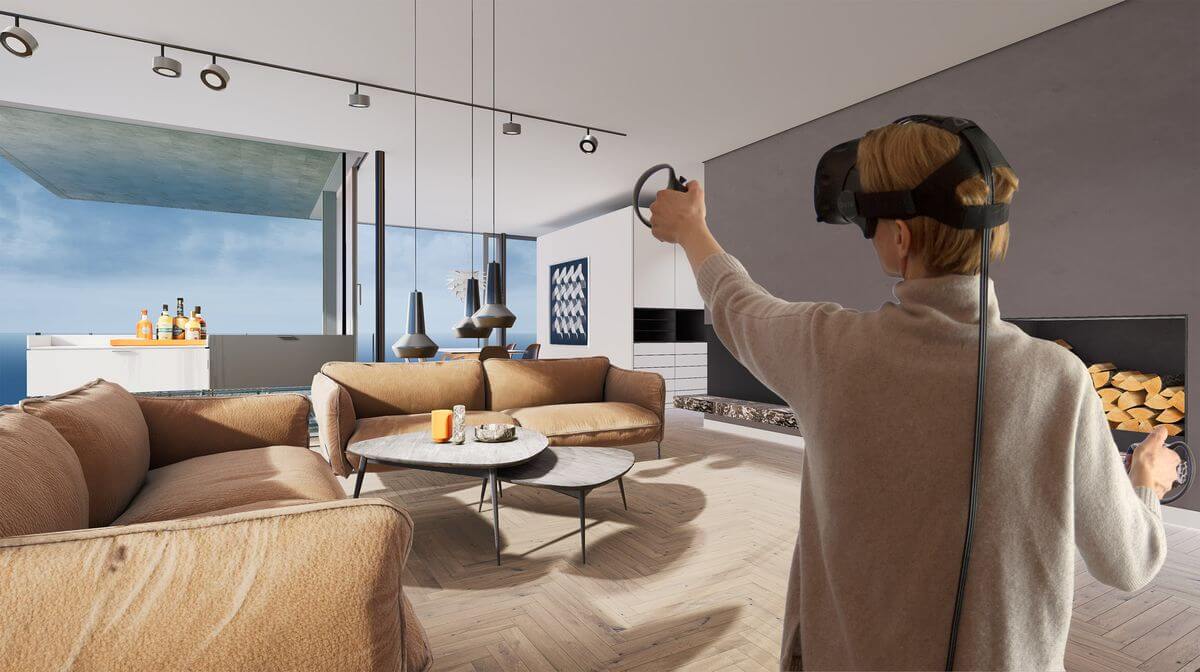
The Ultimate Guide to Turnkey Interior Fit-Out: What to Expect From Start to Finish
Walking into a space that feels like it was made just for you, where every detail, from the lighting to the layout, works in perfect harmony. This is the result of a well-executed turnkey interior fit-out. This complete service takes a bare shell and delivers a fully functional, beautifully finished environment, ready for you to use.
Let’s walk through the entire process so you know exactly what to expect.
The First Conversation
It all begins with a conversation. This initial stage is about connection and understanding. A good interior fitout company will listen intently to your ideas, goals, and the story you want your space to tell. They will ask about your brand identity, daily operational needs, and the experience you want to create for people who use the room.
This deep dive ensures the final design is a true reflection of your purpose. Think of it as laying the foundation for everything that follows. You will discuss budgets and timelines to establish a clear, realistic framework for the project.
The Blueprint Phase
With a solid understanding of your needs, the creative team gets to work. This is where ideas start to take a visual form. You will see initial concepts, which might include mood boards, sketches, or floor plans. This collaborative phase is for refining the vision. Your feedback is essential to shape the direction.
Following concept approval, the team develops detailed technical drawings and specifications. These documents are the master plan for the entire project, covering every electrical outlet, plumbing line, and material sample for MEP works. Nothing is left to chance. You will review these comprehensive plans and give your final approval before any physical work begins. This careful preparation prevents surprises later on.
The Build
Once the plans are set, the project moves into the construction phase. Your fit out partner manages every aspect, acting as the single point of contact. This means you can focus on your business while they coordinate the many moving parts, such as acquiring permits, procurement, and the on-site work itself.
A skilled team of tradespeople arrives on site. You will see walls going up, electrical wiring being installed, and the skeleton of your space taking shape. Regular updates from your project manager will keep you informed of progress. This stage follows a meticulously planned schedule to maintain momentum and meet important milestones. Quality control is constant, with supervisors ensuring every detail aligns with the approved drawings and the high standards you expect.
The Final Touch
With the main construction complete, the focus shifts to the elements that give the space its character and function. This includes the installation of custom millwork, lighting fixtures, flooring, and all the final decorative items.
Furniture arrives and is arranged according to the plan. This phase transforms the construction site into the environment you imagined. It’s a satisfying stage where the vision becomes a tangible reality.
The Handover
The final step is the official handover. Your fit out team will walk you through the completed space, demonstrating all its new features and systems. You will receive all necessary warranties, manuals, and documentation. The goal is to deliver a space that is completely operational from day one. There are no loose ends. You simply receive the keys to a finished environment, ready for you to start using immediately.
A turnkey interior fit out is a structured, creative, and collaborative process. By choosing the right partner, you gain an experience that translates your vision into a physical space designed for success. From that first spark of an idea to the moment you unlock the door, you are guided by expertise every step of the way, resulting in an interior that truly works.
USBC Interiors - The Top Interior Fit Out Contractor in Dubai
We are proud to be one of the leading interior companies in Dubai, with a speciality in creating world-class spaces for residential, commercial, retail, and hospitality clients. Our team delivers speed and uncompromising quality through complete turnkey solutions, including design concepts, execution, joinery, MEP works, and high-end finishes.
With a strong reputation for on-time project delivery and in-house craftsmanship, we ensure that every project reflects our client’s vision. From conceptual design and space planning to custom joinery, MEP integration, and project management, we are committed to creating spaces that improve the way people live and work.
How to Choose the Right Fit-Out Partner in Dubai: Questions to Ask Before Hiring
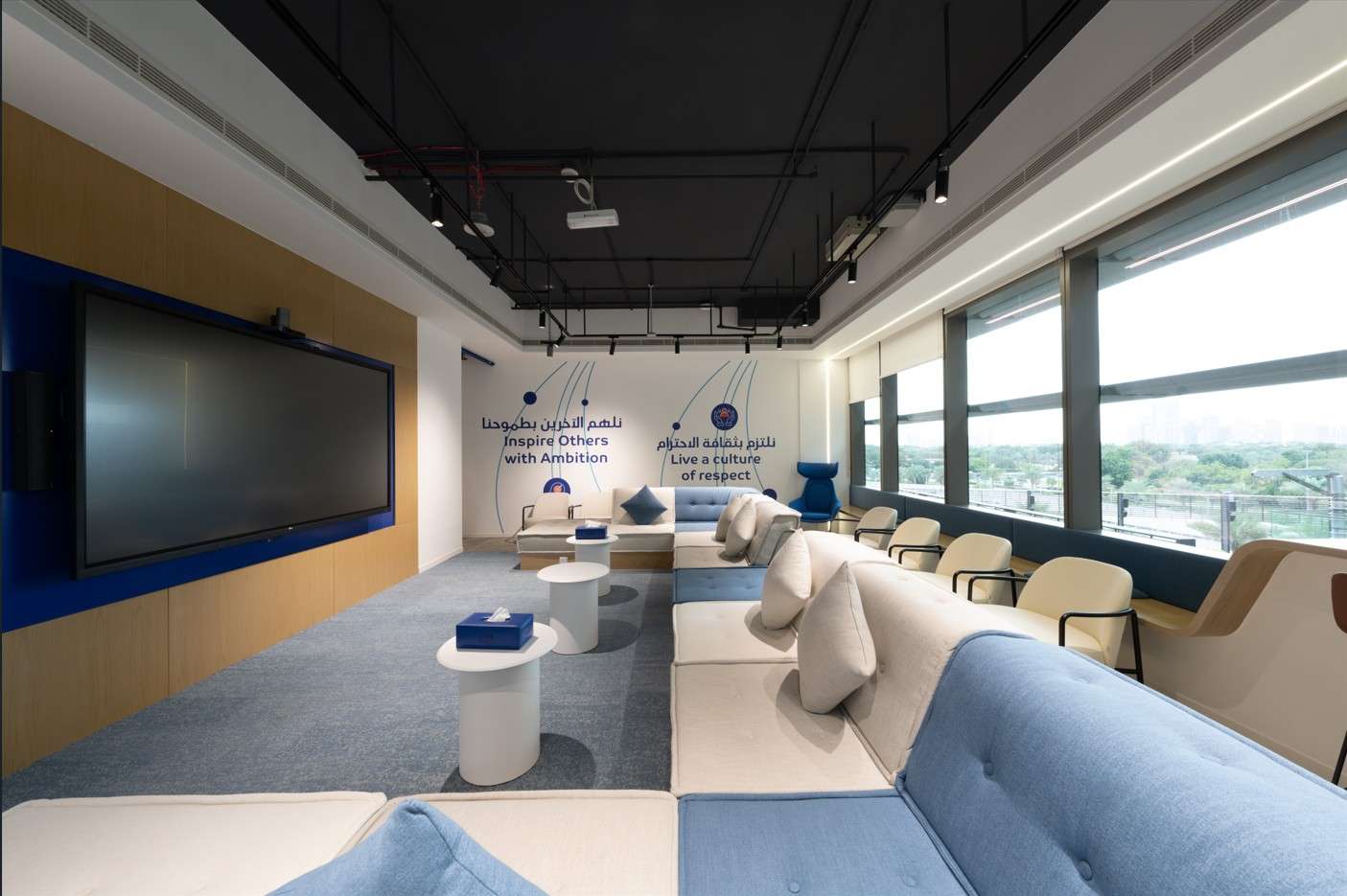
You have the blueprints. The vision for your new office, retail store, or restaurant is clear. The interior design is finalised, full of promise and potential. Now comes a critical step: finding the right team to build it.
Selecting your fit out partner is one of the most significant decisions you will make. The right team brings your concept to life, while the wrong one can lead to delays, budget overruns, and frustration.
This choice goes beyond comparing price tags. You need to find a reliable, skilled partner who understands the local context and can deliver quality work. Your fit out contractor is the bridge between a beautiful design and a functional, finished space. To find that ideal partner, you need to have the right conversations.
Here are essential questions to ask before you sign on the dotted line.
Start with Their Specialisation
The past projects of an interior fitout company in Dubai tell a lot about its capabilities. Do not just glance at their portfolio; study it.
Can you show me examples of projects similar in scale and style to mine?
This is your first filter. A contractor specialising in luxury villas might lack the specific expertise for a high-traffic medical clinic. Look for a proven track record in your specific sector. If you are building a contemporary café, you want a partner with extensive experience in food and beverage venues, who understands the practical needs of a commercial kitchen and customer flow.
What is your typical project management structure?
You need to know who your main point of contact will be. Is there a dedicated project manager assigned to your job? How often will they communicate updates? A clear structure with a single, accountable manager prevents confusion and ensures your questions and concerns are addressed promptly.
Dig Deep into Practicalities and Processes
A beautiful portfolio is promising, but a solid operational foundation is non-negotiable. This is where you assess their ability to execute.
How do you handle permits and approvals in Dubai?
This question is specific and crucial. The regulatory environment in Dubai can be complex, involving entities like the Dubai Municipality. An experienced local fit out partner will have a dedicated team or proven process for securing all necessary permits. Their familiarity with local regulations can prevent costly and time-consuming roadblocks.
What does your materials supply chain look like?
Consistent access to quality materials is vital for keeping a project on schedule. Ask about their relationships with suppliers and subcontractors. Do they have backup options if a material is delayed? A robust and resilient supply chain is a hallmark of a professional outfit and protects your project from unforeseen disruptions.
Can you walk me through your approach to quality control and site safety?
The answer here reveals their professional standards. They should have a clear system for inspecting work at different stages and a strong commitment to on-site safety protocols. This protects everyone involved and ensures the final build meets the expected level of finish and durability.
Discuss the Financials and the Fine Print
A transparent and detailed proposal is a sign of a trustworthy partner. Vagueness is a red flag.
Can you provide a fully itemised and fixed-price quotation?
Be wary of vague estimates. You need a detailed breakdown of labour, materials, and subcontractor costs. A fixed-price contract for your interior and fitout project protects you from unexpected cost escalations once the work begins, giving you budget certainty.
What is included in your payment schedule?
A professional payment plan is tied to clear, verifiable milestones, like completion of demolition, electrical rough-in, or final installation. Be cautious about any partner who demands a very large upfront payment. The schedule should feel balanced and fair, reflecting the progress of the work.
How do you handle unexpected issues or changes once work begins?
Even with the best planning, surprises can happen. A professional contractor will have a clear, documented “variation order” process. This outlines how changes are requested, priced, and approved, ensuring there are no financial surprises and that all adjustments are formally agreed upon.
Look for a True Partner
Finally, move beyond the transactional questions to gauge if they are a true collaborator.
Can I speak with a few of your past clients?
Speaking directly to previous clients provides invaluable insight. Ask about their experience regarding communication, adherence to schedule and budget, and how the contractor resolved any challenges.
What do you see as the potential challenges for a project like mine?
This question tests their foresight and experience. A seasoned professional will identify potential hurdles from the start, demonstrating they are thinking ahead and planning for real-world conditions.
Choosing an interior fit out contractor in Dubai requires a lot of due diligence. It requires looking past the surface and engaging in meaningful dialogue. The right firm will answer your questions with clarity and confidence, making you feel secure in their hands. They become an extension of your own team, dedicated to building your vision with the skill and professionalism that Dubai’s market demands. Take your time, ask these questions, and trust the partner that provides honest, detailed answers. Your finished space will reflect that careful choice.
Why Dubai Firms Choose Luxury Interior Design
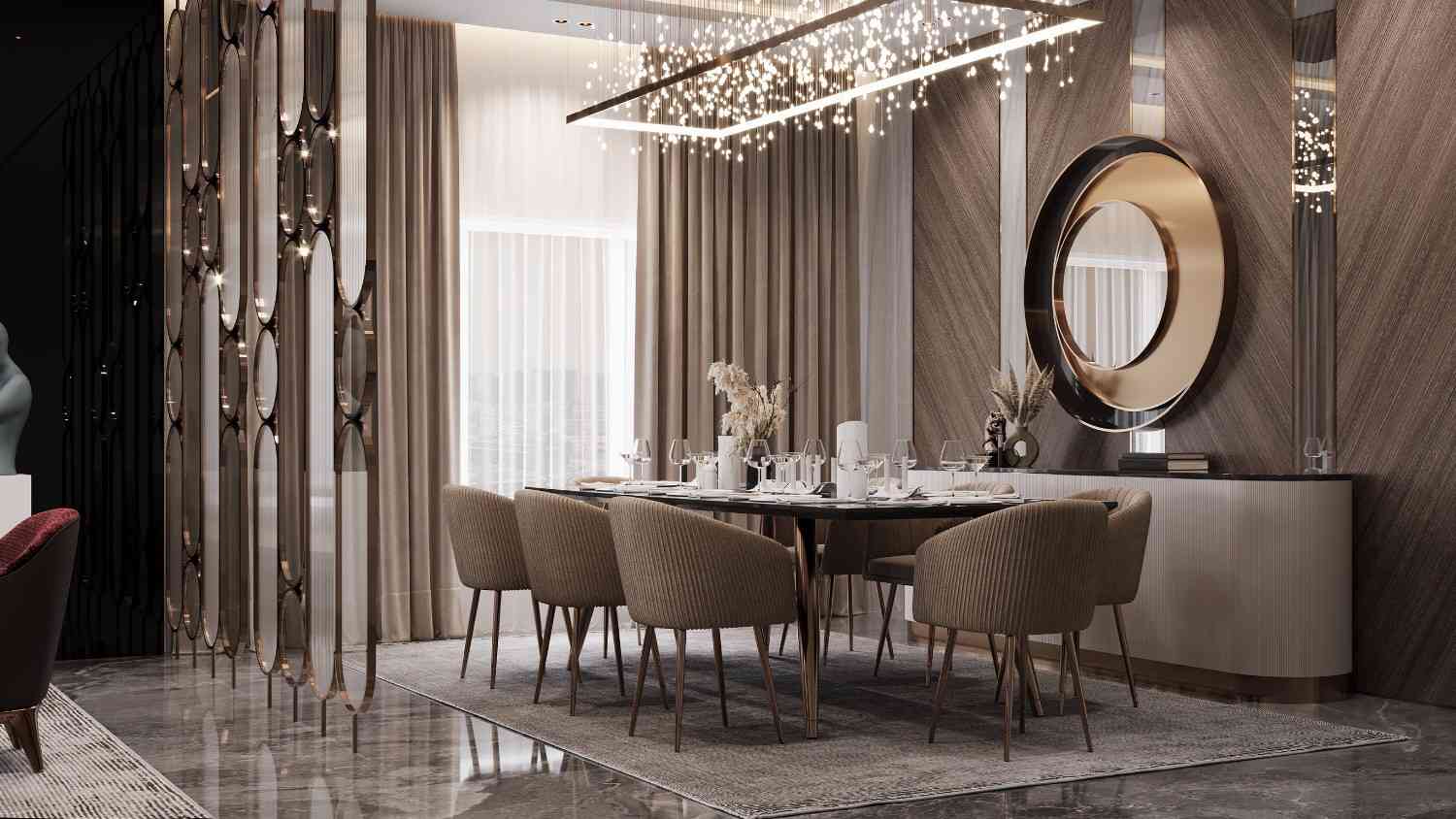
Dubai is a global center where first impressions count, and for companies, the appearance and atmosphere of their workspaces say a lot. A growing number of businesses are spending money on upscale interior design, not only for aesthetic reasons but also to attract customers, foster trust, and provide motivating work conditions for staff members.
A premium office design, from opulent finishes to creative layouts, symbolizes the accomplishments and aspirations of a firm. In a cutthroat market like Dubai, where customers want top-notch quality, companies view interior design as a wise investment that enhances long-term growth, productivity, and brand image.
The Reasons Behind Dubai Companies Investment in Expensive Interior Design
The Importance of First Impressions
In the business world, first impressions are quite important. An attractive workplace can help a business stand out in Dubai, where there is a lot of competition. Expensive interior design demonstrates professionalism and attention to detail while creating a welcoming atmosphere.
- Partners and customers are drawn to attractive designs.
- A sophisticated design conveys stability and prosperity.
- Distinct interior design can increase brand remember by becoming a conversation topic.
Improving Professionalism and Brand Identity
A company’s brand identity is reflected in its interior design. High-end interior design is used by companies in Dubai to communicate their ethos and values. The company’s reputation is enhanced by this brand and space congruence.
- Brand messaging is reinforced by consistent design elements.
- Exquisite interior design can increase a brand’s perceived worth.
- Credibility and trust are fostered in professional settings.
Improving Worker Comfort and Productivity
Businesses in Dubai place a high premium on the welfare of their employees. Luxurious interior design helps create a welcoming and motivating workplace, which can raise morale and productivity.
- Ergonomic furnishings promote productivity and well-being.
- Well-designed layouts promote cooperation and concentration.
- Environments that are aesthetically pleasing foster creativity and lower stress.
Growing the Value of Real Estate
Investing in upscale interior design can raise a property’s worth considerably. This gives companies a competitive edge in Dubai’s cutthroat real estate market.
- High-end designs draw in top-tier tenants.
- Durability and lifespan are guaranteed by premium materials.
- Enhanced property value can lead to higher returns on investment.
Important Components of Interior Design for Luxury Offices
Enchanting Lighting Options
Luxurious interior design heavily relies on lighting. Innovative lighting solutions are being chosen by businesses in Dubai to improve the atmosphere and usability of their facilities.
- Systems of lighting that can be customized provide flexibility.
- Options that use less energy support sustainability objectives.
- Lighting fixtures with artistic designs lend a sense of refinement.
Tasteful and Cozy Furnishings
The foundation of interior design is furniture. Luxurious office furniture in Dubai blends comfort and style to create areas that are both fashionable and useful.
- The well-being of employees is given priority in ergonomic designs.
- Durability and luxury are guaranteed by premium materials.
- The company’s own flair is reflected in the custom products.
Flooring as the Basis for Elegance
The flooring selection can change a room. In Dubai, companies are spending money on high-end flooring solutions that serve as the framework for opulent interior design.
- Hardwood floors and marble provide classic elegance.
- Eco-friendly methods are compatible with sustainable materials.
- Creative designs give things dimension and personality.
Eye-Catching Color Schemes and Wall Art
Color palettes and wall art are crucial for establishing a unified and motivating space. Businesses in Dubai are making daring statements with these components.
- The company’s ideals and culture are reflected in the artwork.
- Productivity and mood are influenced by color psychology.
- Uniqueness is added via custom murals and installations.
Integrating Greenery for Serenity
Incorporating greenery into office design is a growing trend in Dubai. Plants not only enhance aesthetics but also improve air quality and employee well-being.
- Biophilic design connects employees with nature.
- Indoor gardens create a calming atmosphere.
- Green walls serve as living art installations.
What Advantages Do Expensive Interiors Offer Businesses?
How Do Luxury Interiors Impact Employee Morale?
Luxury interiors have a profound impact on employee morale. In Dubai, businesses recognize that a well-designed workspace can lead to happier and more productive employees.
- Comfortable environments reduce stress and fatigue.
- Inspiring spaces foster creativity and innovation.
- Employee satisfaction leads to lower turnover rates.
Can Client Perception Be Affected by Expensive Interior Design?
Customer perception is essential to the success of any organization. Especially in a cutthroat market like Dubai, upscale interior design can have a beneficial impact on how customers perceive a business.
- Exquisite settings exude accomplishment and expertise.
- Memorable encounters are produced by distinctive designs.
- Long-term relationships can result from favorable impressions.
How Much Does It Cost to Invest in Luxury Office Design?
The cost of investing in luxury office design in Dubai varies based on the space size, design complexity, materials, and level of customization. However, it’s best seen as an investment rather than an expense one that delivers both tangible and intangible returns.
- Premium materials and bespoke finishes enhance long-term value.
- Smart layouts and ergonomic solutions boost productivity.
- A refined environment elevates your brand image and client experience.
Latest Interior Design Trends for Luxurious Offices
Minimalism: Making Things Simpler and Louder
In Dubai’s upscale office design, minimalism is a prevalent trend. Businesses design environments that are both aesthetically beautiful and useful by emphasizing simplicity.
- Clarity is enhanced by open areas and clean lines.
- Distractions and clutter are lessened with minimalist designs.
- Luxury is enhanced when quality is prioritized above quantity.
Designing Biophilically: Bringing Nature Indoors
In Dubai, biophilic design is becoming more popular. Businesses may create more interesting and healthy work environments by integrating natural features.
- Well-being is enhanced by natural light and ventilation.
- Warmth is added by organic textures and materials.
- Designs influenced by nature foster creativity.
Sustainability: Adopting Sustainable Behaviors
An important factor in luxury interior design is sustainability. Businesses in Dubai are implementing eco-friendly procedures to comply with regional laws and worldwide trends.
- Systems that use less energy have a smaller environmental impact.
- Sustainable and recycled materials encourage accountability.
- Green certifications improve the reputation of a brand.
Innovative Collaborative Spaces
Modern office design must include collaborative areas. Companies in Dubai are establishing settings that promote creativity and teamwork.
- Different work styles are supported by flexible layouts.
- Integration of technology improves teamwork.
- Unofficial gathering spaces encourage innovation
How Does Business Growth Get Affected by Expensive Interior Design?
Do Exquisite Interiors Draw in More Customers?
By making a good first impression, luxurious interior design can draw in more customers. Businesses in Dubai are using design to increase their attractiveness.
- Reliability and success are communicated by elegant spaces.
- Memorable encounters are produced by distinctive designs.
- Referrals are the result of satisfying client experiences.
How Expensive Interior Design Improves Brand Recognition
Expensive interior design is a major factor in improving brand perception. Businesses in Dubai convey their values and goals through design.
- Brand identification is strengthened by consistent design components.
- Luxurious settings increase the perceived worth of a brand.
- Top talent and customers are drawn to brands with a strong image.
Is Investing in Luxurious Interiors Worth It?
Purchasing opulent interior design is a calculated move that will pay off in the long run. Businesses in Dubai are realizing how important upscale design is to their expansion and prosperity.
- Increased property value results in profits.
- Profitability is increased via increased staff productivity.
- Business expansion is fueled by satisfied customers.
Why Are Businesses in Dubai Prioritizing High-End Interiors
High-end interior design is becoming a top priority for businesses in Dubai in order to remain competitive and meet the city’s high expectations for luxury. This investment is a calculated step that will help them succeed and expand.
- Top personnel and clients are drawn to opulent spaces.
- Expensive design raises the value and image of a brand.
- Long-term gains are the result of strategic investments.
Final Thoughts
In conclusion, the trend of investing in high-end interiors is reshaping the business landscape in Dubai. By prioritizing luxury design, businesses are enhancing their brand image, improving employee well-being, and attracting more clients. As the city continues to grow and evolve, the demand for sophisticated and innovative interior solutions will only increase, solidifying Dubai’s position as a global hub for luxury design.
FAQs
Dubai’s dynamic commercial landscape thrives on innovation, prestige, and visual impact. Businesses aim to create environments that embody their brand’s success and forward-thinking ethos. High-end interiors have become a statement of credibility and ambition helping companies attract clients, retain top talent, and stand out in a competitive market.
Premium interiors tell a story, they capture the essence of a brand and translate it into a physical space. From elegant materials to refined detailing, every element plays a role in shaping how a brand is perceived. Companies that collaborate with USBC Interiors benefit from designs that align seamlessly with their brand philosophy, creating spaces that are both visually captivating and functionally efficient.
Luxury fit-outs offer exceptional longevity, quality, and functionality. While the initial investment may be higher, the long-term returns are significant, reduced maintenance, enhanced durability, and timeless appeal. USBC Interiors focuses on using superior materials and meticulous craftsmanship, ensuring each project delivers lasting value and continues to impress for years to come.
USBC Interiors follows a comprehensive design and build process that emphasizes creativity, precision, and efficiency. Their in-house team of designers, engineers, and project managers collaborate to deliver spaces that balance luxury with practicality. From initial concept development to final execution, every stage is managed with an unwavering commitment to quality and attention to detail.
Businesses in Dubai choose USBC Interiors because of the company’s proven reputation for delivering excellence. Known for transforming concepts into breathtaking realities, USBC Interiors combines design innovation with flawless execution. Their projects are defined by craftsmanship, functionality, and sophistication qualities that resonate with Dubai’s elite business environment. Clients trust the firm for its ability to consistently deliver interiors that not only meet expectations but redefine them.
Top 5 Sustainable Office Design Trends for 2025
Sustainable office design & fit outs in Dubai are fast becoming a defining feature of forward-thinking workplaces. As environmental benchmarks shift from aspiration to expectation, the companies who choose sustainable workplaces are quietly gaining more than just green credentials: They’re building workspaces that are leaner, smarter, and better attuned to what both employees and stakeholders value most.
From modular reuse and digital energy tracking to wellness-driven layouts, this article explores seven key trends transforming the way offices are fitted out. Whether you’re planning a new space or upgrading an existing one, these insights offer a practical lens into the next chapter of workplace sustainability.
In 2025, sustainable fit out Dubai projects are being shaped not only by government initiatives like the UAE’s Net Zero 2050 strategy, but by a growing recognition that healthier, more efficient environments deliver tangible returns in performance, in wellbeing, and in brand perception. More than a design upgrade; sustainable workplaces are in fact strategic decisions with lasting impact.
Trend no 1 - Low-VOC and Non-Toxic Materials
Poor indoor air quality is linked to headaches, fatigue, and long-term illness. In office environments, it also directly impacts cognitive performance and absenteeism — concerns addressed by WELL and LEED standards. In response, interior fit out contractors in Dubai are moving away from traditional finishes toward low-toxicity alternatives.
Here’s how sustainable office fit outs are prioritising health through material usage:
- VOC-compliant finishes: Interior fit out contractors in Dubai are selecting paints, adhesives, and sealants with VOC content below 50g/L, supported by certifications like GREENGUARD Gold or Red List-free declarations.
- Health-focused furniture: Workstations and partitions are now evaluated for their emission profiles, with a preference for recycled content, formaldehyde-free composites, and low-toxicity textiles — balancing sustainability with ergonomics and overall user wellbeing.
- Air testing and monitoring: Indoor air quality audits, conducted before and after occupancy, are being embedded into project close-out processes — ensuring measurable compliance with LEED standards.
- Transparent procurement: Leading fit out companies are insisting on transparent declarations from suppliers and rejecting non-compliant products, especially in high-contact or enclosed environments.
How it’s being applied in real-life fit outs:
In practice, interior fit out contractors in Dubai are implementing more rigorous supplier screening and materials tracking to meet evolving sustainability standards. USBC Interiors, for example, conducts full vendor vetting ensuring that all suppliers meet ethical, environmental, and wellness-focused benchmarks. This supports the delivery of low-VOC, health-conscious interior solutions aligned with LEED certification targets.
Trend no 2 - Net-Zero Carbon Fit Outs
With the UAE’s Net Zero by 2050 strategy influencing both regulation and investment, commercial interiors are under growing pressure to demonstrate climate responsibility. Sustainable office fit outs in Dubai are no longer focused solely on operational efficiency — they must now address the environmental impact of materials and construction from the outset. For forward-thinking organisations, this shift offers an opportunity to lead in transparency, innovation, and long-term value.
Here’s how this trend shapes sustainable office fit outs:
- Lifecycle carbon modelling: Tools like BIM and Mastt are used early in the process to measure the total footprint of fit outs — covering sourcing, transportation, and installation. This enables better decisions before a single material is ordered.
- Smart MEP integration: Mechanical, electrical, and plumbing (MEP) systems are now optimised through automation. Zoned HVAC, daylight-responsive lighting, and energy metering allow for real-time energy reduction while maintaining user comfort.
- Passive design strategies: Layouts are being adapted to reduce artificial cooling and lighting demand. Features like natural ventilation, solar shading, and efficient insulation are now being integrated into fit out planning — particularly in glass-heavy commercial buildings.
- Material selection with intent: Choosing lower-impact materials — such as FSC-certified timber or modular aluminium systems — helps reduce embodied emissions and often supports LEED point achievement. More on this later.
Trend no 3 - Biophilic Design for Healthier Workspaces
Biophilic design in office fit outs integrates natural elements into indoor spaces — from daylight and greenery to natural textures, sounds and materials. As evidence grows around the connection between our indoor environments and its effect on both physical and mental health, biophilic strategies are now widely recognised for reducing stress, enhancing cognitive function, and improving overall wellbeing. In turn, this translates to healthier, more present employees and measurable business benefits through improved productivity, engagement, and reduced absenteeism.
How it’s shaping sustainable office fit out Dubai projects:
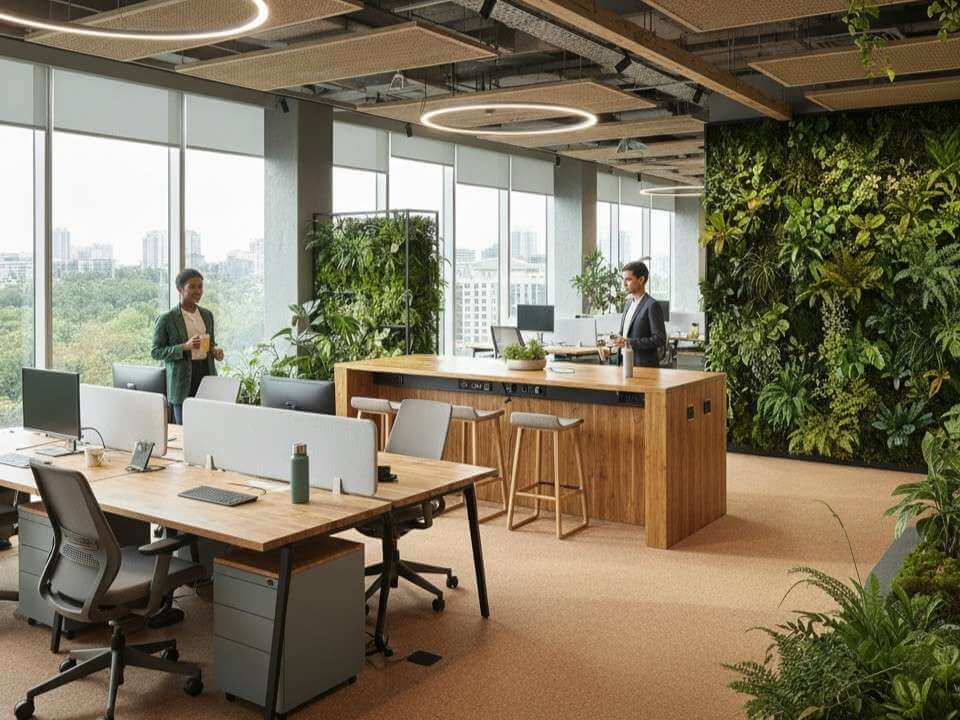
Green infrastructure in interiors: Indoor planting schemes, moss walls, and vertical gardens are now integrated into reception zones, breakouts, and circulation spaces. These are designed not just for aesthetics, but for improved air quality and acoustic absorption.
Daylight optimisation: Daylighting is now a design priority. Fit out contractors in Dubai are repositioning floorplans to maximise window access and using transparent partitions to distribute natural light deeper into open-plan areas. This reduces artificial lighting demand and regulates circadian rhythm — a WELL Building Standard requirement.
Natural materials and finishes: Timber, cork, stone, and textured surfaces are being chosen for their tactile qualities and biophilic resonance. These materials also support sustainable fit out Dubai targets by offering low-VOC, recyclable options aligned with LEED and WELL benchmarks.
Outdoor connectivity: Where space allows, office fit outs are increasingly incorporating terraces, shaded courtyards, and rooftop zones with Wi-Fi and seating — creating a psychological reset zone that encourages healthy breaks.
Where sustainable fit out Dubai projects are applying biophilic principles:
USBC Interiors has implemented WELL-compliant biophilic elements in commercial interiors such as Dubai Hills Park Office and Etihad Rail Office — applying daylight studies, plant integration, and renewable surface choices to support employee wellbeing while also meeting ESG goals.
Trend no 4 - Smart Technology for Sustainable Workplaces
Digital tools are becoming the backbone of sustainability in office interiors — offering real-time data, automation, and user control that supports both efficiency and comfort. As ESG performance becomes a C-suite priority, smart systems allow sustainable workplaces to be optimised long after handover.
Let’s look at how sustainable fit out projects are integrating smart technology:
- Sensor-integrated HVAC and lighting: IoT-enabled systems respond to real-time occupancy and daylight levels, adjusting airflow and brightness automatically to reduce waste.
- Digital twin integration: Advanced fit outs use digital replicas to simulate system performance, optimise layout strategies, and forecast maintenance — improving both sustainability and cost predictability.
- Smart booking tools: Sensor-driven meeting room and desk booking platforms help reduce space wastage, enabling businesses to optimise layout and energy use.
- User-controlled comfort systems: Touch-free systems and app-based controls allow occupants to adjust temperature, lighting, and ventilation preferences, increasing satisfaction while supporting energy goals.
What smart technology integration looks like inside Dubai’s office fit outs:
Commercial fit out solutions in Dubai are using integrated smart tech to reduce consumption and elevate occupant experience while aligning with government initiatives. This includes motion sensors, IoT-enabled HVAC, and predictive building analytics ensuring sustainable office fit out projects meet performance targets long after handover.
Trend no 5 - Water and Energy Efficiency in Office Fit Outs
In line with the resource-efficiency goals discussed in circular and smart technology trends, energy and water savings have emerged as high-impact, low-barrier strategies — offering measurable ROI alongside regulatory compliance.
How the trend is shaping sustainable office fit outs:
- Zoned HVAC and smart metering: Interior fit out contractors in Dubai are zoning mechanical systems by usage type — reducing unnecessary air conditioning in underused zones and leveraging real-time metering to flag inefficiencies.
- Low-flow and greywater plumbing: Water-saving fixtures such as aerated taps and dual-flush toilets are paired with reuse systems that divert greywater to landscaping or cooling — now common in sustainable fit out Dubai projects.
- LED and daylight-responsive lighting: Efficient lighting design, combined with controls that dim or switch off based on occupancy and daylight levels, offers quick ROI and supports certification goals.
- Appliance and system efficiency: From ENERGY STAR-certified fridges to efficient data room cooling, resource consumption is tracked and reduced at every layer.
Final Thoughts
The sustainable office design trends emerging in 2025 demonstrate a fundamental shift where environmental responsibility and human well-being are inseparable from business strategy. By integrating biophilic design, prioritizing circularity in materials, leveraging smart technology for efficiency, and building adaptable, energy-conscious spaces, companies are not just achieving a smaller carbon footprint, they are strategically investing in a more productive, healthier, and resilient workforce. The future workplace is defined by a holistic approach, where the design choices we make today create enduring value for both the planet and the people within the organization.
FAQs
Sustainable office design helps reduce environmental impact, lowers operational costs, and creates healthier workplaces that boost employee productivity and well-being. It’s also becoming a key factor for businesses aiming to meet ESG goals and attract eco-conscious clients
Simple steps like using LED lighting, integrating natural ventilation, choosing recycled or locally sourced materials, and installing smart energy systems can make a big difference without major renovation costs.
Companies can work with local fit-out specialists experienced in green building standards such as LEED or WELL. Using modular furniture, energy-efficient HVAC systems, and water-saving fixtures are great starting points for sustainable offices in Dubai’s climate.
How To Avoid Delays in Clinic Fit out
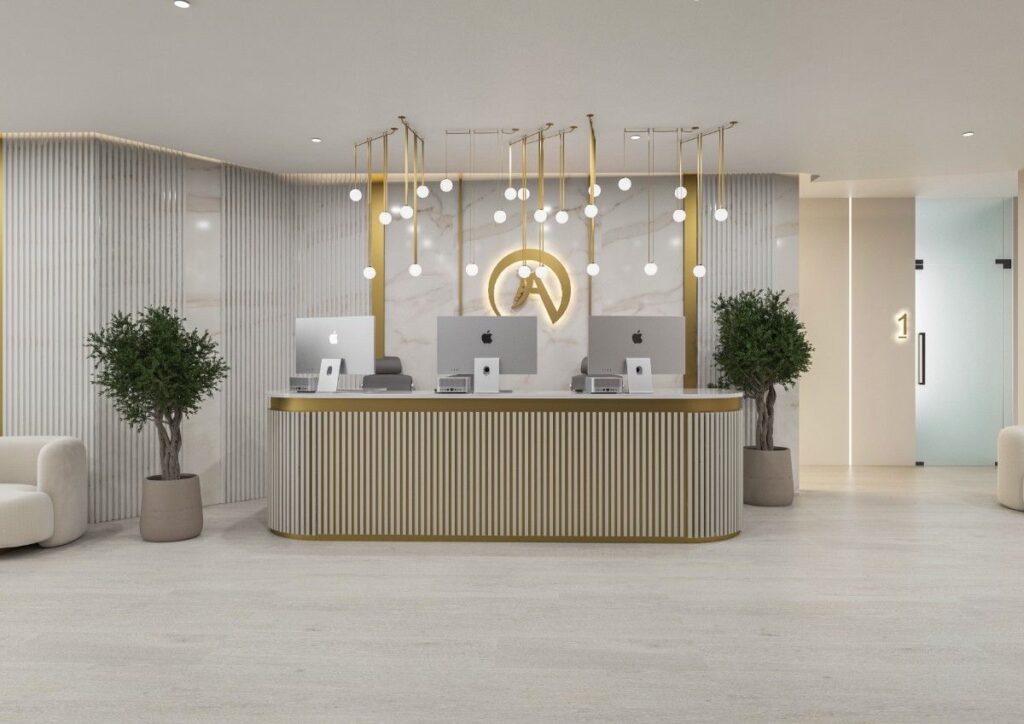
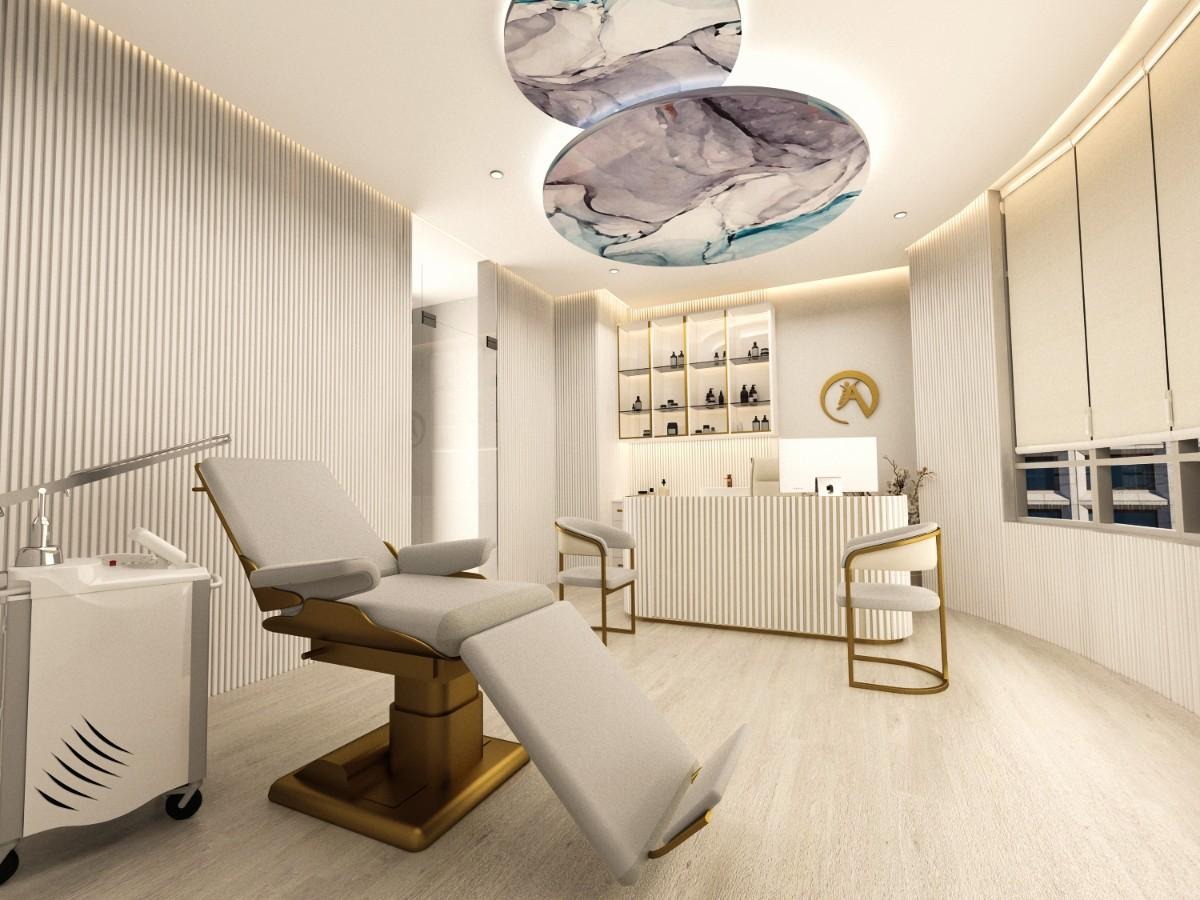
Establishing a medical institution in Dubai or a clinic requires more than just excellent design; it also requires rigorous adherence to licensing regulations set forth by organizations such as the Dubai Municipality and the Dubai Health Authority (DHA).
Due to late permissions from several authorities, non-compliance with healthcare design standards, or inadequate documentation, many clinics experience needless delays during the fit-out phase. In addition to raising project expenses, these obstacles may cause the clinic’s opening date to be delayed.
The good news? The majority of license delays can be prevented with careful planning, appropriate collaboration with licensed contractors, and early contact with regulatory agencies.
Streamlining Your Clinic Fit Out : A Guide to Avoiding Licensing and Permitting Delays
Launching a clinic in Dubai is a regulatory challenge that requires more than great design; you must meet strict licensing standards. The biggest obstacles to opening on time are often incomplete paperwork, non-compliant layouts, and poor communication with the authorities. To ensure a smooth process, you must proactively manage these compliance factors.
Start with a Registered Consultant
Your first move should be to partner with a DHA-approved professional. They are essential for designing and submitting drawings that flawlessly adhere to all mandatory size and layout regulations.
Obtain NOCs Immediately
Do not proceed without securing the required No-Objection Certificates from your landlord or developer. Failure to get these early is the number one time-waster.
Submit All Technical Drawings as One Package
Delays are inevitable if your Architectural, MEP (Mechanical, Electrical, and Plumbing), and fire safety plans are incomplete or inaccurate. Ensure they comply with all DHA and Civil Defence standards.
Run Approvals Concurrently
Avoid sequential waiting by sending your submissions to all relevant bodies (DHA, Municipality, Civil Defence, and DEWA) simultaneously.
Self-Inspect Before Regulator Visits
Perform a comprehensive internal audit to fix all small defects, from ventilation issues to fire exits, before official inspectors arrive for the final sign-off.
Plan for Costs and Clarity
Ensure your timeline is realistic through ongoing, open communication with your team, and allocate AED 20,000 to AED 50,000 specifically for the licensing process.
Simplifying the Design Process for Clinics
- Efficient Space Planning: Maximize the clinic’s functionality by focusing on the flow of patients and staff while strictly adhering to all health and safety regulations.
- Equipment Integration: Seamlessly incorporate your medical machinery by verifying its regulatory standards, planning for its specific electrical and structural needs, and guaranteeing easy access for maintenance.
- Accessibility Compliance: Demonstrate a commitment to inclusive care by designing for patients with disabilities, including providing wheelchair access, appropriate signage, and accessible restroom facilities.
Obtaining the Required Approvals and Permits
Building codes in the area
A crucial component of obtaining permits for your clinic’s fit-out is adhering to local building codes. These codes address everything from accessibility and fire safety to building integrity. To get the required approvals, make sure your design complies with these codes.
- Recognize the building codes in your area.
- Verify that the design complies with the codes.
- Obtain the required approvals.
Inspections by the Health Department
Inspections by the health department are an essential aspect of the licensing procedure. These examinations guarantee that your clinic satisfies all safety and health requirements. A seamless approval procedure can be ensured and delays can be avoided by being well-prepared for these inspections.
- Be well-prepared for health inspections.
- Verify adherence to safety and health regulations.
- Take care of any problems found during inspections.
Compliance with Fire Safety
One of the most important aspects of clinic design is fire safety compliance. This entails putting in place fire safety precautions like smoke detectors, extinguishers, and well-marked escape routes. Ensuring adherence to fire safety laws is crucial for safeguarding both employees and patients.
- Put fire safety precautions into action.
- Make sure the escape routes are clear.
- Observe fire safety guidelines.
Applying Quality Control Procedures
Frequent Inspections
Maintaining quality control during the clinic fit-out process requires routine inspections. These examinations guarantee adherence to all rules and aid in the early detection of possible problems. You can prevent expensive delays and keep your project on schedule by scheduling routine inspections.
- Plan on doing routine inspections.
- Recognize possible problems early.
- Verify adherence to rules.
Management of Documentation
Maintaining compliance and preventing delays need efficient documentation management. This entails maintaining thorough records of every permission, inspection, and permit. The licensing procedure can be streamlined with the support of a strong documentation system.
- Keep thorough records of every document.
- Put in place a strong documentation system.
- Make the licensing procedure more efficient.
Resolving Non-Compliance Concerns
Resolving non-compliance concerns as soon as possible is crucial to preventing delays in the fit-out of your clinic. This entails spotting problems early and creating plans to deal with them. Frequent reviews and audits can assist guarantee adherence and avoid delays.
- Find non-compliance problems early.
- Create plans to deal with problems.
- Perform audits and reviews on a regular basis.
Using Technology to Improve Clinic Architecture and Licensing
Using 3D Modeling to Verify Compliance
A strong tool for guaranteeing conformity in clinic design is 3D modeling. Before building starts, you can use this technology to see your design and spot any possible compliance problems. The design process can be streamlined and expensive revisions can be avoided with the use of 3D modeling.
- To visualize designs, use 3D modeling.
- Early detection of compliance issues is key.
- Make the design process more efficient.
Systems for Digital Documentation
Systems for digital documentation are crucial for handling the intricate paperwork associated with clinic fit-outs. By organizing and storing all required papers, these systems facilitate information access and updating as needed. The licensing procedure can be made more efficient by putting in place a digital documentation system.
- Put in place a mechanism for digital documentation.
- Arrange and preserve the required paperwork.
- Make the licensing procedure more efficient.
Getting Ready for Compliance After Licensing
Regulations Training for Staff
Maintaining compliance once your clinic receives a license requires that your employees receive regulatory training. This entails making sure employees are aware of their duties and offering thorough training on all pertinent legislation. Staff members may remain aware and compliant with regular training updates.
- Give thorough instruction on regulations.
- Make sure employees are aware of their duties.
- Update training on a regular basis.
Putting Continuous Compliance Checks in Place
Maintaining your clinic’s regulatory compliance requires regular compliance audits. To find possible problems and guarantee compliance, this entails doing routine audits and reviews. Maintaining excellent care and avoiding delays can be achieved by putting in place continuous compliance checks.
- Perform audits and reviews on a regular basis.
- Determine any possible problems with compliance.
- Assure continued adherence to rules.
Making Plans for Upcoming Expansions
A key component of preserving compliance is making plans for upcoming growth. This entails taking future expansion into account and making sure the layout and functioning of your clinic can handle unforeseen demands. Making plans for upcoming expansions might help you stay compliant and prevent delays.
- Think on possible expansion and growth.
- Make sure operations and design take future requirements into account.
- Prevent delays and uphold adherence.
Final Thoughts
Although navigating the complicated world of clinic fit-outs and licensing can be difficult, you can prevent common delays and guarantee a seamless procedure with careful preparation and attention to detail. Understanding licensing regulations, making compliance plans, and utilizing technology can help you optimize your clinic’s layout and deliver high-quality patient care. Clinic Fitout Contractors dubai
FAQ’s
1. Why do licensing delays happen in clinic fitouts?
Licensing delays often occur due to incomplete documentation, non-compliance with local regulations, or misaligned project timelines. Companies like USBC Interiors help clients prepare accurate plans and ensure designs meet all regulatory requirements, reducing the chances of delays.
2. How can I ensure my clinic fitout complies with local regulations?
Understanding and adhering to local health and safety regulations is crucial. USBC Interiors specializes in clinic fitouts that comply with authorities like the Dubai Health Authority (DHA), ensuring your project passes inspections smoothly.
3. What documents are typically required for clinic licensing?
Common requirements include floor plans, equipment lists, certifications, and permits. USBC Interiors assists clients in preparing all necessary documentation accurately, so submissions to licensing authorities are complete the first time.
4. Can hiring a professional fitout company reduce licensing delays?
Yes. A knowledgeable fitout company understands regulatory requirements and avoids design mistakes that can trigger delays. USBC Interiors ensures your clinic layout and design meet all standards, minimizing back-and-forth with authorities.
5. How long does it usually take to get clinic licensing approved?
Approval timelines vary depending on the type of clinic and local regulations. By coordinating design and construction schedules with the approval process, USBC Interiors helps clients plan realistically and avoid project hold-ups.